
15 April 2026
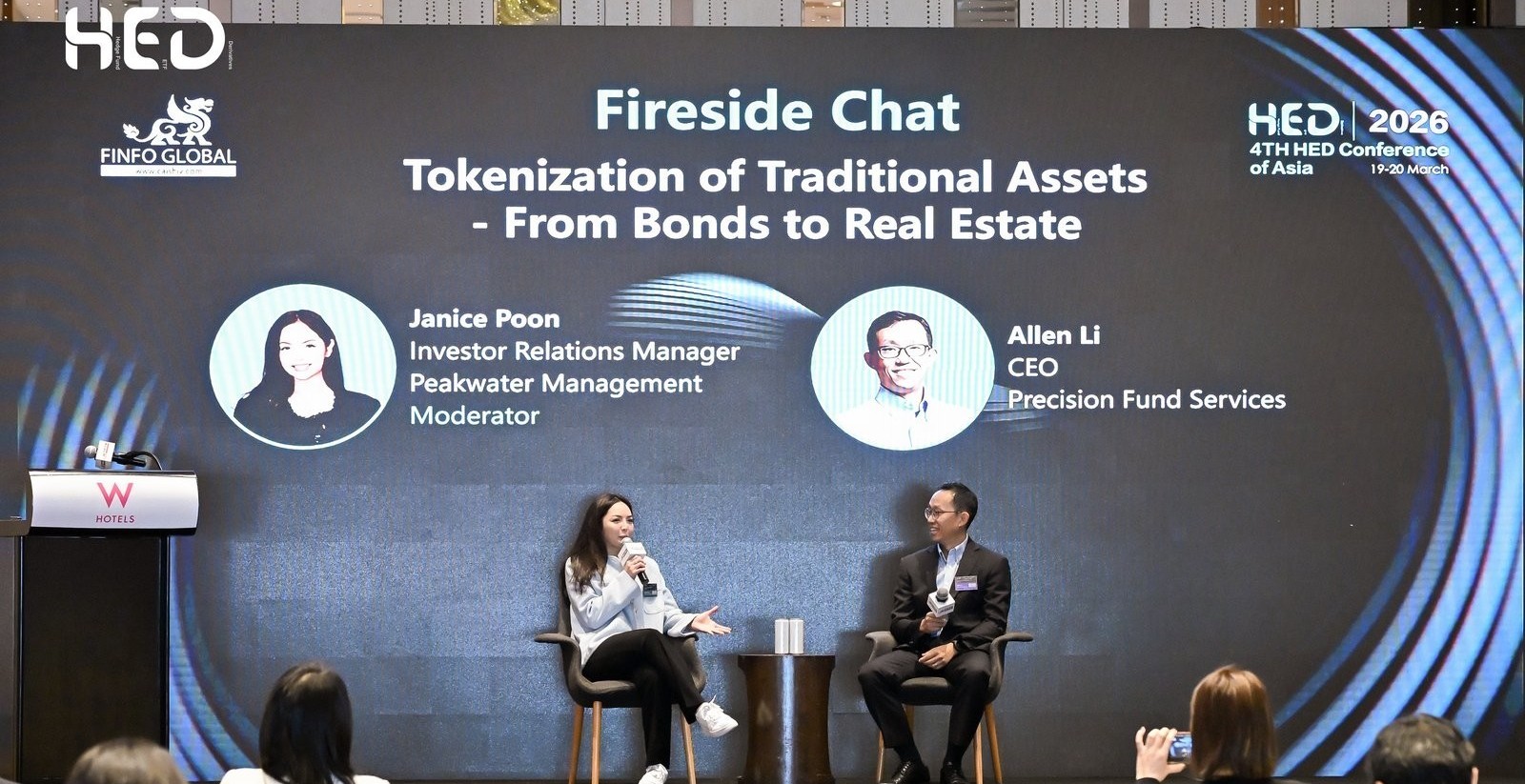
Tokenization is steadily reshaping how funds are structured, issued, and administered. However, from a fund administrator's perspective, successful tokenization is not driven by technology alone. It depends on sound fund structuring, regulatory alignment, and robust on- and off-chain operational controls.
During the HED sharing session on tokenization, we examined tokenized fund operations from a practical, operational perspective—highlighting what is working in today's market, what remains fundamentally unchanged, and the critical areas that fund administrators, managers, and service providers must address to implement tokenization responsibly. The following outlines the key takeaways from the discussion.
1. Common Structures and Jurisdictions for Tokenized Funds
Tokenization can be applied to existing, well-established fund structures, rather than requiring entirely new vehicles. Common structures include:
• Cayman Islands SPC
• Cayman Exempted Limited Partnerships (ELP)
• BVI Funds
• Hong Kong structures, including:
– Limited Partnership Funds (LPF)
– Open-ended Fund Companies (OFC)
The choice of jurisdiction depends on the regulatory framework, target investor base, and distribution strategy.
For Hong Kong–based fund managers, it is important to note that tokenizing a fund typically involves additional regulatory uplift requirements. Regulators will assess the proposed structure, operational workflow, controls, and investor protection measures before granting approval.
As such, tokenization should be approached as a coordinated structuring exercise, requiring close collaboration among:
• Legal advisers
• Blockchain agents / tokenization management platforms
• Tokenization technology providers
• Fund administrators
2. What Exactly Is Tokenized in a Tokenized Fund?
In a tokenized fund, it is not the underlying assets that are tokenized.
Instead:
• Fund shares or partnership interests are represented as tokens on a blockchain
• Each token serves as a digital representation of legal ownership
• Legal ownership itself is still formally recorded off-chain
The token functions as a digital wrapper around a traditional fund interest, rather than replacing the legal and regulatory framework of the fund.
3. The Role of the Off-Chain Record
The off-chain investor register remains a critical component of tokenized fund operations.
Specifically:
• Investor details are recorded off-chain following:
– Completion of subscription or redemption
– Approval by the fund's directors or investment manager
• This off-chain register continues to serve as the official record of ownership
From an administrator's perspective, the off-chain register is treated as the golden source of truth, even where blockchain records are used operationally.
4. Tokenization Does Not Change the Fund's Investments
Tokenization does not alter the fund's investment strategy.
Underlying investments remain the same as those of traditional private funds, including:
• Liquid assets
• Fund-of-funds investments
• Private equity
• Other alternative assets
Tokenization impacts how interests are issued, transferred, and recorded, not what the fund invests in.
5. The Role of the Blockchain Agent (Tokenization Management Platform)
A critical participant in a tokenized fund ecosystem is the blockchain agent, also referred to as a Tokenization Management Platform.
Key responsibilities include:
• Implementing the tokenization process
• Deploying smart contracts provided by the blockchain technology service provider
• Minting and issuing fund tokens upon approved subscriptions
• Coordinating token burns at redemption or fund maturity
The blockchain agent operates under defined instructions and approvals, ensuring that on-chain actions precisely reflect off-chain legal events.
6. Do Tokenized Funds Still Need a Fund Administrator?
Yes—fund administration remains essential.
Key administrative responsibilities include:
• NAV calculation and performance fee computation
• Registrar and official ownership record maintenance
• AML/KYC screening and ongoing monitoring
• Daily reconciliation between blockchain records and off-chain registers
• Investor reporting
Tokenization may enhance data visibility, but it does not replace the fiduciary and oversight role of the fund administrator.
7. How and When Are Tokens Minted?
Tokens are minted only after strict conditions are met:
1. Investor completes AML/KYC checks
2. Subscription funds are received in the fund's bank account
3. Subscription is approved by the investment manager and/or fund directors
Minting is typically:
• Triggered by the investment manager
• Subject to multi-signature approval
• Allocated only to whitelisted investor wallets
This ensures that on-chain issuance is fully aligned with off-chain legal ownership.
8. How and When Are Tokens Burned?
Token burning is closely linked to the redemption process:
• Investor submits a redemption request
• Redemption proceeds are settled in fiat off-chain
• Tokens are burned on-chain only after confirmation of payment
This sequencing ensures continuous alignment between on-chain token balances and the off-chain investor register.
9. Fund Custody Wallet
A tokenized fund requires a custody wallet to securely hold tokens minted by the fund.
Key characteristics include:
• Managed by a licensed custodian
• Designed for secure token storage and controlled token flows
Common features:
• Hybrid hot and cold wallet architecture
• Multi-signature approval framework
• Wallet whitelisting to restrict transfers
Custody arrangements are a core control element in institutional-grade tokenized funds.
10. Market Value of Minted Tokens
Tokenized fund tokens do not derive their price from the blockchain.
Instead:
• Each token mirrors the NAV per share/unit calculated by the fund administrator
• Blockchain records reflect quantity and ownership, not valuation
• Pricing remains an off-chain process governed by traditional valuation policies
11. Transfer of Tokens
Token transfers are permitted only within a controlled and regulated framework.
Typically:
• The buyer must first become an approved investor
• Full subscription, KYC, and onboarding processes must be completed
• Transfer requires approval by the investment manager
• Execution is facilitated via the designated blockchain agent
Peer-to-peer transfers or trading on public exchanges are not common for institutional tokenized funds.
12. On-Chain and Off-Chain Reconciliation
Fund administrators perform regular reconciliations between:
• Blockchain token records
• Official off-chain ownership registers
The off-chain register remains the definitive record, with blockchain serving as a supporting operational ledger.
13. Wallet Whitelisting and Distributor Role
Wallet whitelisting ensures that:
• Investor wallet ownership is verified
• Only approved addresses can receive or transfer tokens
In many cases, licensed distributors play an important role, including:
• Client onboarding
• AML/KYC checks
• Facilitating token transfers within a controlled framework
This layered approach reinforces investor protection and regulatory compliance.
Final Thought
Tokenization represents an evolution in how fund interests are issued and managed—but not a departure from core fund administration principles.
At institutional scale, success depends on:
• Clear legal structuring
• Strong coordination between on-chain and off-chain processes
• Robust controls, reconciliation, and governance
Tokenized funds will scale not through technology alone, but through precision in operations and accountability across the ecosystem.
Precision is actively collaborating with its professional network—including legal advisers, custodians, blockchain agents, and technology providers—to develop practical, institution-grade fund administration solutions for tokenized funds. At the same time, we continue to closely monitor regulatory and market developments to ensure our operating models evolve in step with industry standards. Our focus remains firmly on delivering accurate, compliant, and scalable administration that supports innovation without compromising governance or control.
onboarding@precisionfundservices.com
6 Raffles Boulevard, Marina Square,
#03-308, Singapore 039594
2nd Floor, AXA Southside,
38 Wong Chuk Hang Road, Hong Kong
DS Building, No.538 De Zheng Bei Road,
Yue Xiu District, Guangzhou
L6, China Central Place 2, No.79 Jianguo Rd,
Chaoyang Dist, Beijing

Please leave your message, and we will contact you as soon as possible.
Name *
Company *
Email Address *
Mobile Number *